
Step 1:
The Journey
** Disclaimer ** There will be excerpts on this page that are explicit and will describe some extremely sensitive detail. Please be advised.
Below are excerpts from multiple books that are memoirs from the Holocaust. (Click image for shortcut)

Viktor
Frankl

Magda Herzberger

Elie
Wiesel
Viktor Frankl
"As we approached the camp, I drew back to a concept that I had studied extensively: 'delusion of reprieve.' The condemned (certain to die) man, immediately before his execution (death), gets the illusion that he might be saved at the very last minute.
We, too, clung to shreds of hope and believed to the last moment that it would not be so bad.
Just the sight of the red cheeks and round faces of those prisoners was a great encouragement.
Little did we know then that they formed a specially chosen elite, who for years had been the receiving squad for new transports as they rolled into the station day after day.”

Magda Herzberger
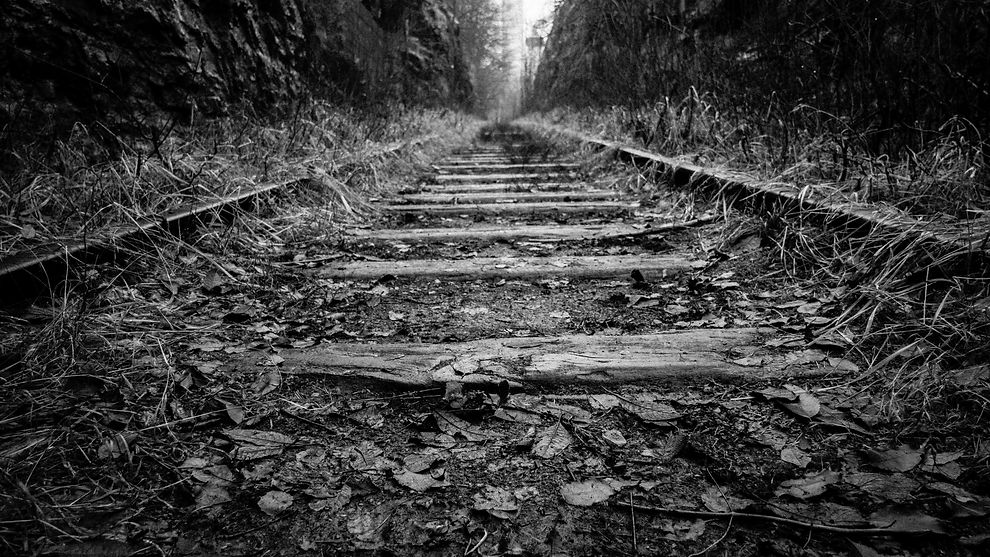
Our departure took place towards the end of May 1944. Accompanied by the guards, we marched by foot to the railroad station. We were carrying our small suitcases with our few belongings. We arrived at the long rows of railroad cattle cars assigned for our transportation. From there on, it was like madness descending on us…
We were pushed forcefully into those cattle wagons by the guards. So many people were pushed into each compartment that we could hardly move. There was so little space for each person. It was difficult to lie down on the wooden, barren surface of the cars. We tried to sit down on our suitcases.
There were small children among us who were crying, terrified of what was happening. There were also old people having difficulty coping with the nightmarish environment. And then the heavy doors of the cattle cars were shut and bolted from outside. It got pretty dark and dreary inside.
(1)
Not much light seeped through the narrow slits of the wooden-boarded walls. We were placed behind bars and imprisoned in that frightening environment.
The train finally started moving. The slow puffing of the steam engine grew faster and faster as the train carried us further and further into the unknown. We couldn’t believe that something so awful was happening to us.
We traveled for three days and three nights. During all that time we didn’t receive any food or drink, and there were no toilet facilities whatsoever. We were locked up day and night. They didn’t let us out of the cattle wagons to be certain that there was no chance for us to escape.
We had to use our compartments for toilet purposes. Some people brought along some pots from their homes and we used them for restroom purposes. Little kids had difficulty in understanding what was going on.
(2)

Elie Wiesel
"The next morning, we walked toward the station, where a convoy of cattle cars was waiting. The Hungarian police made us climb into the cars, eighty persons in each one. They handed us some bread, a few pails of water. They checked the bars on the windows to make sure they would not come loose.
The cars were sealed. One person was placed in charge of every car: if someone managed to escape, that person would be shot. A prolonged whistle pierced the air. The wheels began to grind. We were on our way.
Lying down was not an option, nor could we all sit down. We decided to take turns sitting. There was little air. The lucky ones found themselves near a window; they could watch the blooming countryside flit by.
After two days of travel, thirst became intolerable, as did the heat. There was still some food left. But we never ate enough to satisfy our hunger. Our principle was to save for tomorrow. Tomorrow could be worse yet.
The train stopped in Kaschau, a small town on the Czechoslovakian border. We realized then that we were not staying in Hungary. Our eyes opened. Too late.
(1)
** Take a second and go back to the promises that were stated on the "Ghetto" page. German soldiers manipulated extremely intelligent families to willingly go into extremely overcrowded cattle cars to be sent to various camps. **
The door of the car slid aside. A German officer stepped in accompanied by a Hungarian lieutenant, acting as his interpreter. "From this moment on, you are under the authority of the German Army. Anyone who still owns gold, silver, or watches must hand them over now (see below).


Anyone who will be found to have kept any of these will be shot on the spot. Secondly, anyone who is ill should report to the hospital car. That's all." "There are eighty of you in the car," the German officer added. "If anyone goes missing, you will all be shot, like dogs."
The two disappeared. The doors clanked shut. We had fallen into the trap, up to our necks. The doors were nailed, the way back irrevocably cut off. The world had become a hermetically (airtight) sealed cattle car.
(2)


There was a woman among us. She was in her fifties and her ten-year-old son was with her, crouched in a corner. Her husband and two older sons had been deported with the first transport, by mistake. The separation had totally shattered her.
I knew her well. A quiet, tense woman with piercing eyes, she had been a frequent guest in our house. Her husband was a pious man who spent most of his days and nights in the house of study. It was she who supported the family.
She had completely lost her mind.
On the first day of the journey, she had already begun to moan. She kept asking why she had been separated from her family. Later, her sobs and screams became hysterical. On the third night, as we were sleeping, some of us sitting huddled against each other, some of us standing, a piercing cry broke the silence:
"Fire! I see a fire! I see a fire!"

There was a moment of panic. Who had screamed? It was her. Standing in the middle of the car, in the faint light filtering through the windows, she looked like a withered tree in a field of wheat.
She was howling, pointing through the window:
"Look! Look at this fire! This terrible fire! Have mercy on me!"
Some pressed against the bars to see. There was nothing. Only darkness of night. It took us a long time to recover from this harsh awakening. We were still trembling, and with every screech of the wheels, we felt the abyss opening beneath us. Unable to still our anguish, we tried to reassure each other:
"She is mad, poor woman..."
Someone had placed a damp rag on her forehead. But she nevertheless continued to scream:
Fire! I see a fire!
Her little boy was crying, clinging to her skirt, trying to hold her hand:
"It's nothing, Mother! There's nothing there... Please sit down..." He pained me even more than did his mother's cries. Some of the women tried to calm her:
"You'll see, you'll find your husband and sons again... In a few days..." She continued to scream and sob fitfully.
"Jews, listen to me," she cried. "I see a fire! I see flames, huge flames!"
It was as though she were possessed by some evil spirit. We tried to reason with her, more to calm ourselves, to catch our breath, than to soothe her.
"She is hallucinating because she is thirsty, poor woman... That's why she speaks of flames devouring her..."
Fire! I see a fire!
Her little boy was crying, clinging to her skirt, trying to hold her hand:
"It's nothing, Mother! There's nothing there... Please sit down..." He pained me even more than did his mother's cries. Some of the women tried to calm her:
"You'll see, you'll find your husband and sons again... In a few days..." She continued to scream and sob fitfully.
"Jews, listen to me," she cried. "I see a fire! I see flames, huge flames!"
It was as though she were possessed by some evil spirit. We tried to reason with her, more to calm ourselves, to catch our breath, than to soothe her.
"She is hallucinating because she is thirsty, poor woman... That's why she speaks of flames devouring her..."
But it was all in vain. Our terror could no longer be contained.
Our nerves had reached a breaking point. Our very skin was aching. It was as though madness had infected all of us. We gave up. A few young men forced her to sit down, then bound and gagged (covered her mouth up) her. Silence fell again. The small boy sat next to his mother, crying. I started to breathe normally again as I listened to the rhythmic pounding of the wheels on the tracks as the train raced through the night. We could begin to doze again, to rest, to dream...
An hour or two had passed. The woman had broken free of her bonds and again was shouting:
"Look at the fire! Look at the flames! Flames everywhere..."
The night seemed endless. By daybreak, she had settled down. Crouching in her corner, her blank gaze fixed on some faraway place, she no longer with us. She remained like that all day, mute, absent, alone in the midst (middle) of us. Toward evening she began to shout again:
"The fire, over there!"
She was pointing somewhere in the distance, always the same place. No one felt like quieting her anymore. The heat, the thirst, the stench, the lack of air, were suffocating us. Yet all that was nothing compared to her screams, which tore us apart. A few more days and all of us would have started to scream.
But we were pulling into a station. Someone near a window read to us:
"Auschwitz."
Nobody had ever heard that name.


